What to Keep in Mind at the Playground
 Category Category | Other |
|---|
⏱️ Reading time: 3 minutes

Medically reviewed by pediatrician and perinatal psychologist Polina Kizino
On the playground, your baby not only develops physically but also observes other children, learns social skills, and gains independence. Choose safe play areas, stay nearby, don’t interrupt play unless needed, and remember hygiene and sun protection.

What’s Inside
Quick takeaways
Choose playgrounds with safe surfaces and zones for toddlers.
Outdoor play is a powerful stimulus for motor and sensory development.
Constant adult supervision is key to safety.
Even at an early age, children learn social interaction through observation and imitation.
Hygiene and sun protection are essential.
Avoid interfering in play unless necessary.
Why playgrounds matter right now
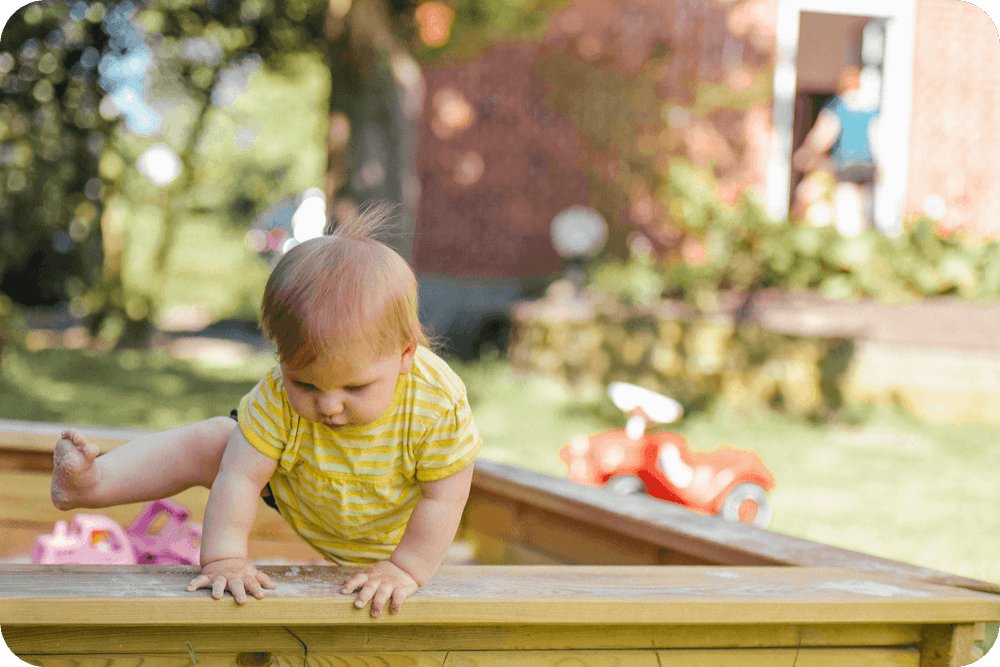
At 10–12 months, babies make a big leap in motor development — standing, taking first steps (often with support), and beginning to explore. A playground becomes a real movement lab: babies learn to balance, climb steps, slide down, and grip bars.
This is also a time of first social observations: a baby might approach another child, watch, try to copy, or attempt to engage — the beginnings of future social skills.
How to ensure safety
Choose smaller playgrounds
For babies under one, smaller spaces are better. Look for:
- Soft surfaces (rubber or sand)
- No tall structures
- Play elements designed for toddlers (nest swings, low slides, balance toys)
Constant supervision
Stay within arm’s reach. Even confident walkers still have shaky coordination. Falls are normal, but adults should minimize risks and teach safe exploration.
Don’t forbid safe climbing — give them freedom to move. If your baby trips or falls, calmly approach, comfort if needed, and encourage them to keep playing. Avoid loud reactions or scolding, as this may create negative associations.
Early social interactions
Children at this age don’t yet play “together,” but they are curious about others. Watching, copying, shared sounds and gestures — these are the roots of social behavior. Parents can:
- Name the child’s emotions (“You got scared,” “You’re having fun”)
- Gently guide behavior (“Don’t pull the toy,” “Pat gently”)
- Model empathy
Hygiene and clothing
- Always wash hands after the playground — kids often put toys or sand in their mouths.
- Make sure clothing is comfortable: it shouldn’t restrict movement, fall off, or pose a tripping hazard.
Emotional support
For some babies, the playground is stressful. Noise, active children, unfamiliar adults — all of it can feel overwhelming. It’s important to:
- Stay close
- Talk about what’s happening
- Don’t insist on playing if your child just wants to watch
With care
Our articles are based on evidence-based medicine and reviewed by pediatricians. However, they do not replace a consultation with your doctor. Every child is unique — if you have any concerns, please consult a medical professional.
 Essentials for baby care many parents choose
 https://amzn.to/45eoNI0

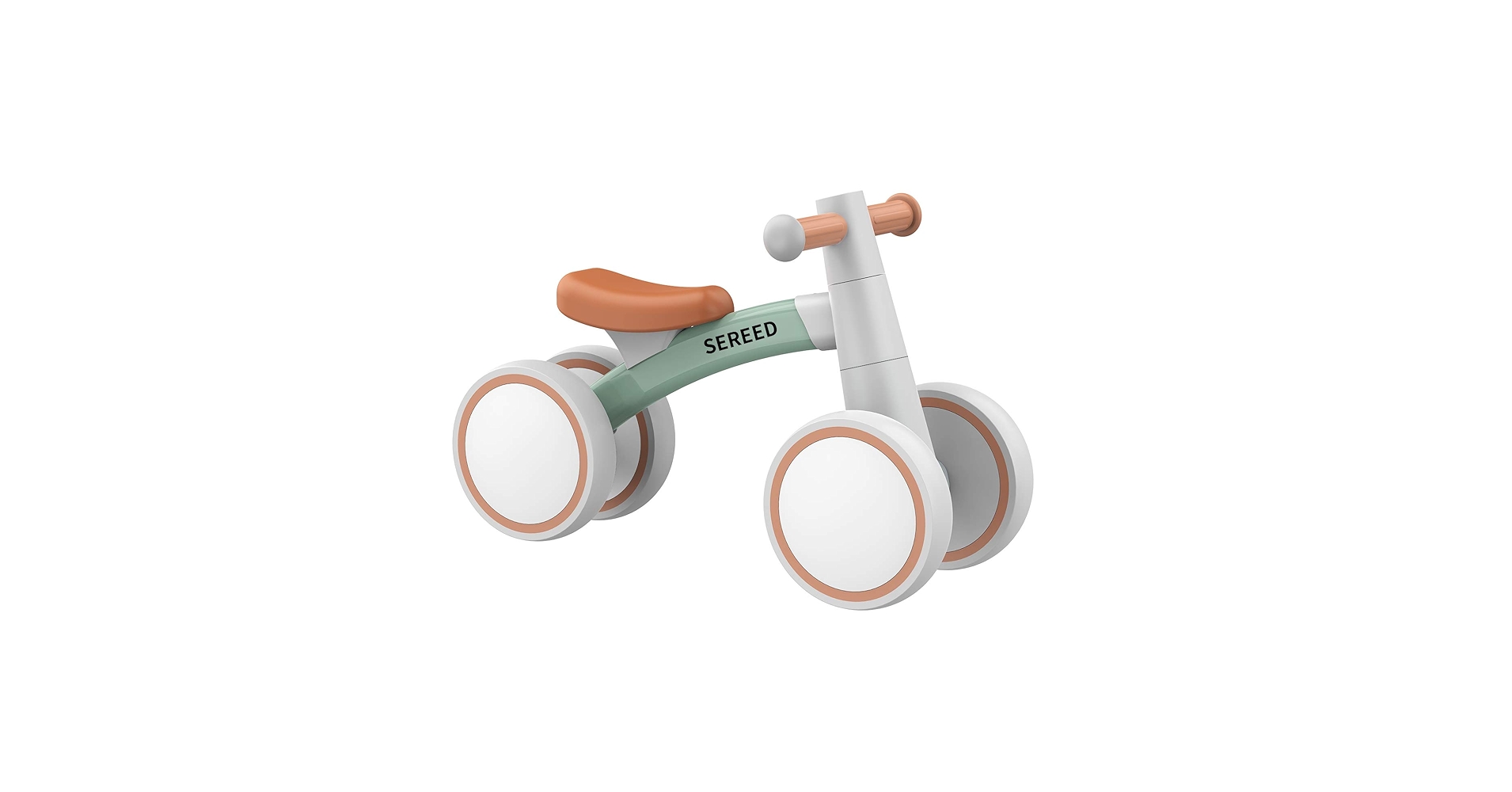


Some links in this article point to products or resources we genuinely find helpful for this topic. If you choose to buy through them, we may earn a small commission — at no extra cost to you.
Sources
- Toddler Developmental Milestones & Safety, Cleveland Clinic, https://my.clevelandclinic.org/health/articles/22625-toddler-developmental-milestones--safety. Accessed 7 May 2025.
- Safety in the kitchen, during feedings, near bodies of water and around burn hazards, Mayo Clinic, https://mcpress.mayoclinic.org/parenting/safety-in-the-kitchen-during-feedings-near-bodies-of-water-and-around-burn-hazards/. Accessed 7 May 2025.
- Baby and toddler safety, UK National Health Service, https://www.nhs.uk/baby/first-aid-and-safety/safety/baby-and-toddler-safety/. Accessed 7 May 2025.
- Brussoni M, Gibbons R, Gray C, Ishikawa T, Sandseter EBH, Bienenstock A, Chabot G, Fuselli P, Herrington S, Janssen I, et al. What is the Relationship between Risky Outdoor Play and Health in Children? A Systematic Review. International Journal of Environmental Research and Public Health. 2015; 12(6):6423-6454. https://doi.org/10.3390/ijerph120606423. Accessed 7 May 2025.
- Little, H., & Wyver, S. (2008). Outdoor Play: Does Avoiding the Risks Reduce the Benefits? Australasian Journal of Early Childhood, 33(2), 33-40. https://doi.org/10.1177/183693910803300206. Accessed 7 May 2025.
- Kenneth R. Ginsburg, and the Committee on Communications, and the Committee on Psychosocial Aspects of Child and Family Health; The Importance of Play in Promoting Healthy Child Development and Maintaining Strong Parent-Child Bonds. Pediatrics January 2007; 119 (1): 182–191. 10.1542/peds.2006-2697. https://publications.aap.org/pediatrics/article/119/1/182/70699/The-Importance-of-Play-in-Promoting-Healthy-Child. Accessed 7 May 2025.
- Sandseter, E. B. H. (2009). Characteristics of risky play. Journal of Adventure Education and Outdoor Learning, 9(1), 3–21. https://doi.org/10.1080/14729670802702762. Accessed 7 May 2025.
- Tremblay MS, Gray C, Babcock S, Barnes J, Bradstreet CC, Carr D, Chabot G, Choquette L, Chorney D, Collyer C, et al. Position Statement on Active Outdoor Play. International Journal of Environmental Research and Public Health. 2015; 12(6):6475-6505. https://doi.org/10.3390/ijerph120606475. Accessed 7 May 2025.